
JorgeN. Ferrer
I have spent my life following a single thread: how we grow, how we love, and how the sacred is embodied in everyday life.
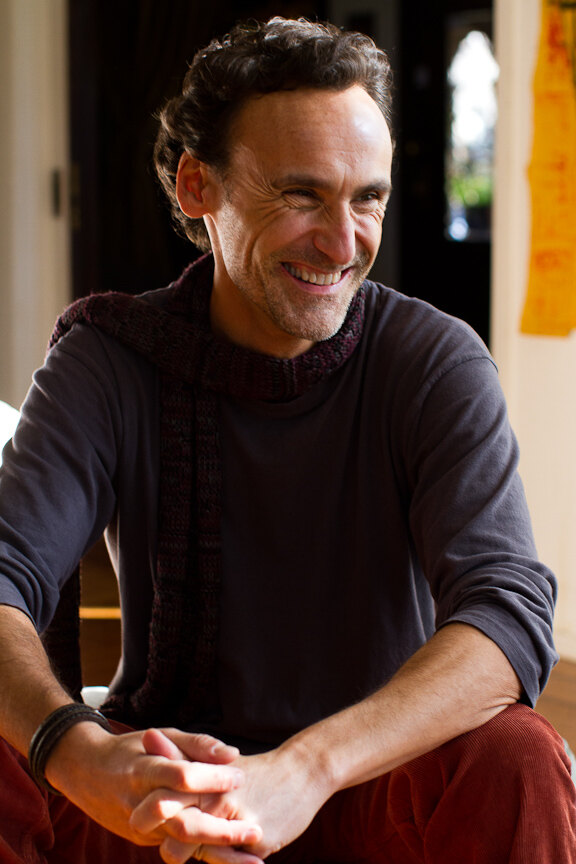
How I got here.
I was born in Barcelona, and I have been asking the same question since I was young: what actually makes a person change? I studied Clinical Psychology at the University of Barcelona and at the University of Wales in Cardiff, and carried out doctoral research on mindfulness meditation at the University of Barcelona.
In 1993 I left for California to complete a PhD at the California Institute of Integral Studies. What was meant to be a doctorate became three decades of teaching, writing, and sitting with people — first as core faculty in San Francisco, where I chaired the Department of East-West Psychology, and today as research faculty in San Diego.
I did not choose the subject. It kept choosing me — and it always led back to how we heal and love.
Along the way the question kept changing shape. Consciousness led me to spirituality. Spirituality led me, unavoidably, to the body. And the body led me to intimate relationships — the one place where everything we believe about ourselves is finally tested.
Everything I have written since circles that same territory: how we transform ourselves to become happier, more present to others, and more effective agents of change.
Four things I have come to trust.
You already carry what you are looking for
My work is neither to fix you nor to instruct you. It is to create a space safe enough — and honest enough — that your own inner knowing can surface and be trusted.
Transformation is not an act of will
It happens when the many intelligences we carry — mental, emotional, somatic, and the quiet vital current beneath them — are invited into the same room and allowed to speak to one another as equal partners.
Love and freedom are not opposites
Most of us were taught to choose: belong to another and lose yourself, or keep yourself and stay alone. Almost everything I have written on intimate relationships argues that this is a false choice.
The sacred is participatory
Meaning is not handed down from above for us to passively receive. It is co-created — between us, with life, through the body. That is the essence of participatory knowing.
None of this is theory to me. It is what three decades of sitting with people, and my own life, have insisted on.

Who I sit with.
My practice is international and offered in both English and Spanish. Whatever brings you here, the underlying task remains the same: to make room for what has not yet been spoken, and to let the body and the heart have a vote.
The record, briefly.
Fellowships, honors, and appointments gathered along the way — and some of the places that have invited me to speak.
- 1990–91Erasmus ScholarshipUniversity of Barcelona / Cardiff University, UK
- 1991George Westby PrizeAcademic excellence, Cardiff University, UK
- 1992–93Doctoral Research Training FellowshipUniversity and Research Commission of the Catalonian Council
- 1993–95“la Caixa” Fellowship“la Caixa” Cultural Foundation, Barcelona
- 1996Fetzer Institute's Presidential AwardThe Fetzer Institute, Kalamazoo, Michigan
- 2000–10Leading ScholarEsalen Center for Theory and Research, Big Sur, California
- 2004Parliament of the World's ReligionsInvited by Raimon Panikkar to present embodied spirituality, Barcelona
- 2005Creator of Embodied Spiritual InquiryA contemplative research method since taught and anthologised internationally
- 2009–11Advisor to Religions for Peace at the United NationsHarnessing the Socially Transformative Power of Spiritual Assets
- 2010American Academy of ReligionAnnual Meeting panel on The Participatory Turn
- 2018–19Advisor to the Smart Cities ProjectObservatorio de Innovación Educativa, Spain
- 2018–Advisor to the Galileo CommissionScientific and Medical Network, United Kingdom
- 2022TEDxDaltVilaInvited talk for the inauguration, Ibiza, Spain

Ready to begin your journey?
Reach out for counseling, coaching, or speaking engagements — in English or Spanish.